Category Archives: Issues and opinions

The source of all wine grapes

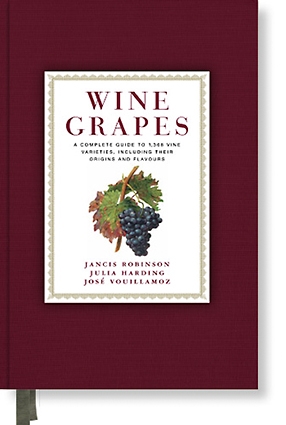
The new Wine Grapes book by Jancis Robinson, Julia Harding and José Vouillamoz is now weighing down my book shelf, or more often grappling for space on my desk or dining room table. However, I have resisted taking this heavy tome on the plane to Turkey where I have come in advance of EWBC 2012. One theory expounded on in this new, important book is that the first grapevine domestication anywhere in the world was in southern Anatolia and excitingly, this region is on my agenda.

The impetus for going to Turkey is that this year’s EWBC, no longer the European wine bloggers conference, but rightly and more appropriately re-named the Digital Wine Communications Conference is taking place in Izmir on the 9 -11 November. It is a fabulous opportunity to meet, chat and share a glass with wine producers, trade, communicators, techies and enthusiasts from all over Europe and beyond. This year there will be people present from more than 35 countries.

Each year the conference is given a theme, and this year that theme is ‘Source’ to reflect just this fact that there is evidence that Turkey is the source of the original wine grape vine. Yet the theme has relevance also for wine communicators as we need to become sources of excellent information on wine, rather than simply sharing the information of others through the many social networks now available to us.

Where Wine, Travel and Food meet
I have agreed to moderate a communications workshop on the subject of putting wine, travel and food in context so as to become an inspiring and authoritative source of information. Quite a daunting task in less than an hour, but I have a strong team supporting me on the panel as follows:

  • Su Birch has been the CEO of Wines of South Africa (WOSA), the exporting voice for South Africa, for over a decade. She is at the cutting edge seeing how producers communicate with journalists and bloggers in a country renowned for its fine wine tourism offering.
  • Wendy Crispell from New York is a wine and food educator, a former restaurateur and an artisanal cheese specialist. A post from her food and wine blog was short-listed for last year’s Born Digital Wine Awards Wine Tourism category.
  • Per Karlsson is Swedish, but based in Paris and with his wife Brit runs BKWine Tours, an award-winning wine tour company running tours in Swedish and English to regions in Europe and the New World. He has also gained recognition for his wine books and his photography.
  • Paola Tich was trained as a journalist and today has her own communications consultancy in London. She has long been a fan of wine, food and travel, and currently is studying for the WSET Diploma qualification. She has a wine blog that includes a healthy dose of food and travel.

The five of us will explore various aspects of the ways to communicate on wine incorporating food and travel themes, and discuss what is best received by the wine consumer. We are hoping for a good audience mix to debate the subject and add to our own views.

Wine Grapes book

The US cover, the UK cover is beige cloth-backed

The new resource on grapes
Whereas the traditional European attitude has always been that terroir or the place that vines grow is the key to the wine, to me the multitude of grape varieties available to plant and then make into wine has always been at least as important as the ‘terroir signature’ of the wine. There have been books on grapes before, but we were badly in need of a bang up-to-date properly researched book, and we indeed have it in the new Wine Grapes book, subtitled “A complete guide to 1,368 vine varieties, including their origins and flavours”. To me it is already indispensable.

Having only just received my copy I haven’t read all the introductory pages yet, but the chapter covering the ‘Historical Perspective’ mentions Dr Patrick McGovern, an ‘oeno-archeologist’ who will be speaking on a panel at EWBC with one of the authors of the book, José Vouillamoz, a biologist and specialist in DNA testing of grape varieties. It promises to be a fascinating session. After the conference out of the choice of ‘post-trips’ offered I chose to go to Elazig in eastern Anatolia, close to the source of where wine may have first been made. I’m excited by the prospect.

In the meantime, I will be missing having the Wine Grapes book within my reach in Turkey, a country with a plethora of grape varieties I’ve never heard of, mostly impossible to spell and pronounce, but some producing very promising wines. I can already see that this big fat book is a fabulous resource and essential for all serious wine lovers to own. A digital version is promised for next spring, but the book itself has to be worth having for the gorgeous old colour prints of many classic and ‘founder’ grape varieties including some of my pet favourites from Jura and Savoie.

Wine Grapes by Jancis Robinson MW, Julia Harding MW and José Vouillamoz is available to buy with a limited special offer on Jancis’ site or for a similar price you can purchase via my Amazon UK or Amazon US stores (when I will eventually receive a few pennies).

About these ads

Debate on green issues in wine must continue

Earlier this month a debate was held between wine writer Monty Waldin, a specialist on organic issues and Dr Richard Smart, a highly experienced viticultural expert. In May this year was the first Natural Wine Fair in London, organised by Isabelle Legeron MW. During the whole year I seem to have had numerous conversations with both professional and amateur wine lovers about green issues. My view is that there is much confusion, and that the overall debate must deepen and continue.

The London Debate

green issues debate cartoon
This should and could have been the most important public debate on green issues in wine to be held for a long time. The ‘Great Grape Debate’ was a 2-hour debate run to Oxford-style debating rules and deftly chaired by Antony Moss MW of the Wine & Spirit Education Trust. Both Monty, the proposer and Richard, the opposition are highly experienced in their respective fields, and known to have opposing views on organic issues.  The motion debated was “The UK Wine Trade should promote Organic and Biodynamic Wines”. The audience was small, but included experienced UK-based wine trade, media and educators. Videos of the debate can be watched in full on WSET’s YouTube channel.

The debate was reported upon as generally disappointing by Anne Krebiehl of Harpers and Richard Hemming of JancisRobinson.com among others. In addition I have read comments by a) Antony Moss, no longer in his Chairman’s role, on his personal Facebook page arguing that Richard Smart won the intellectual debate and b) by Monty Waldin on Jancis Robinson’s forum explaining that although he had ‘won’ the debate, many of his important points had been lost or misunderstood.

The fact that the room was largely in favour of the motion both before and after the debate indicates only, I believe, that the wording of the motion was poorly chosen. It is obvious that the UK Wine Trade should promote organic wines but to what extent and why are the two important questions to debate. In addition, it became clear in question time that many in the audience felt the consumer was not being  properly considered in our debate, which I should stress was largely about wine farming or viticulture, not about wine production, which after all is not Smart’s forte.

Either a more tightly worded motion or a more controversial one could have had a more interesting result. “The UK wine trade should do more to educate the consumer about the benefits of organic and biodynamic wines” might have been very apt for the WSET as host. Not only would the audience have been much more split at the start of the debate, but also I believe Monty and Richard would have put forward their positions much more clearly in their short time. The important issues would have come out sooner, and the audience questions would have been more heated than in fact they were.

Lies, damn lies and statistics
It is clear that no-one knows what proportion of the world’s vineyards are farmed organically (including biodynamically) and those consumers who are particularly interested in seeking out organic wines believe there are far more than is actually the case. For a start, we have the knotty issue of those vineyards that are organically certified by an approved body, and those that are not. Around 10 years ago, the figure stated was around 2% of the world’s vineyards being organic; now I hear 5% is more the accepted figure, but accurate statistics evade my searches.

But, what does this statistic actually mean? Does the figure include the growing numbers of those producers who state they are ‘in conversion’ to organics through a recognised certification system or through just their good intentions (or a few, dare I suggest, perhaps not with such good intentions, but converting for marketing, rather than conviction reasons). Quite a proportion of producers who claim to be ‘natural’ (and yes, I’m one who hates that word, but more of this later) are not certified and some of these do not even farm 100% organically; conversely there are significant numbers of wine producers who do not claim any label whatsoever, but who have been farming organically for many years and would not dream of ever using chemical fertiliser, herbicide, fungicide or pesticide on their vineyards.

Good, bad, organic or natural wine
The term ‘natural wine’ is something I’ve been agonizing about writing a post on most of this year, during which time countless posts and articles have been written on the subject by others, some of which I’ve read and digested and two important books have appeared – Naked Wines by Alice Feiring and Authentic Wines by Jamie Goode and Sam Harrop, neither of which I’ve read yet. I don’t want to be seen as arguing against natural wine for the sake of it, but the following is my personal reasoning.

When I started work in wine over 30 years ago, there was simply ‘wine’ and most UK wine drinkers knew very little about how what they were drinking was made (possibly still the case). Because I became impassioned by the business and chose to make it my career and life, I learnt about it through recognised courses and experiences in working in the business. Thus, I knew – unlike most consumers – about the fact that there was nothing ‘natural’ about wine – fertilizers, pesticides, herbicides etc in the vineyard; sugar, filter agents and most notably sulphur dioxide (SO2 or sulphites) etc added in the winery – this was what was needed to make drinkable wine I learnt. On the other hand, at that time there was still a significant proportion of very bad wine around – oxidized wine, wine reeking of too much SO2 and a host of other faults, not to mention simply hard, acidic or tannic wines, devoid of any attractive fruit.

By the end of the 1980s, the overall quality of wine at every level was improving dramatically. In simplistic terms this was partly due to the rigour introduced by the New World in their wine production methods and partly due to the fact that many more wine producers were trained at winemaking colleges and avoided the most obvious winemaking faults. Better understanding of the importance of hygiene, and technology improved too, allowing in particular less SO2 to be used in the winemaking process, whilst still keeping the wines stable and fresh. At around the same time the organic movement started making some waves. Those of us in the business back then remember the huge quality variations in these wines that succeeded in putting some people off organic completely.

By the turn of the millennium, organic wines had also started to improve dramatically, and biodynamic wines were firmly on the radar. Personally, once I started to understand the philosophies behind the work being done, I found it hugely exciting that at last the environment was being considered in wine production and that some very good wines emerged from producers using these methods. I never once believed these wines were ‘better for the health’ but if they tasted good and at least protected the environment to some extent, why should I have anything but praise and encouragement for them?

The movement for natural wines
For me, the ‘Natural Wine Movement’ has spoilt the party. I was and remain a supporter of well-made, good tasting organic and biodynamic wines (strictly speaking, wines made from organic and/or biodynamically-farmed grapes). I am also delighted when I hear of innovation in wineries aiming to use fewer additives: wineries that shun chaptalization and acidification whenever possible; wineries  who normally use cultured yeasts experimenting with natural yeasts; keeping SO2 levels at low levels through use of excellent hygiene and controlled temperatures; and overall thoughtful winemaking. I have enjoyed over the years explaining these philosophies and methods to consumers whenever I have conducted tutored tastings to wine clubs and other groups. But, the fact that a proportion (anything from 10 – 50%) of any range of self-declared natural wines I’ve tasted has been either faulty or downright unpleasant, or indeed has deteriorated really quickly once opened, frankly upsets me and makes me worried on behalf of the excellent organic and biodynamic producers who increasingly find themselves bracketed with natural wines without even choosing to be.

Organic or ‘biologique’ as the French call it (‘biologico’ in Italian) and biodynamic are terms that are hard but not impossible to explain to consumers, and in my view consumers should be encouraged to support these wine producers. The terms ‘natural wine’ ‘nature’ (in French) or ‘natura’ (in Italian) are highly confusing for consumers and explanations tend to be full of waffle and inexact. Many wine producers have for years used the term ‘natural wine production methods’ in their marketing blurb meaning nothing at all. Then there is the Brut Nature label of sparkling wines with no dosage – I have met consumers recently who have been confused by both of these statements, thinking that the wines would be ‘natural’ when in fact they were not in any sense.

Isabelle Legeron MW, the most qualified active supporter of the natural wine movement in the UK, has done the best job at explaining natural wines and trying to develop a useable definition on her website, but there is no overall accepted definition for either wine producers or consumers to follow. Jancis Robinson MW, who as always is keeping her beady eye on the movement with various comments, wrote that early this month in Burgundy, she found herself trying to explain what natural wines were to Madame Lalou Bize-Leroy, of the famous and pioneering biodynamic wine producer, Domaine Leroy. In my own speciality area of Savoie, the biodynamic wine producer Michel Grisard of Domaine Prieuré St-Christophe whose wines were shown at London’s Natural Wine Fair laughed ruefully when I asked him why – he had no choice really, his importer had agreed to offer his wines for tasting and wanted his support, he hated the term ‘vin nature’ he said. These are great, great wine producers who make the best possible wines they can with respect to the environment – that is the message these producers would like to put across and the term ‘natural’ does them a disservice by associating them with too many faulty wines, risking bringing us back to the days when most consumers thought that organic wines were a highly risky buy in terms of the pleasure they might get.

Conventional wines and sustainability
In the debate in London, Richard Smart told of the fear growing amongst wineries he consults to about whether they would receive unfavourable critique for not converting to organic viticulture. In my own travels I have felt a certain defensive stance emerge amongst wine producers who do not practice organic methods – just one example of an ‘excuse’: in mountain regions with steep vineyards, to shun herbicides completely requires a huge amount of manual labour, that some producers can’t  afford.

However, many producers are being credited with using sustainable practices either with or without local certifications. Up until recently I’ve been very suspicious of the various sustainable accreditation schemes. In most they aim to reduce chemical use in the vineyard, using accurate weather forecasting to ensure only the minimum amount of chemicals is used on a strictly ‘as needed’ basis. However, I felt that most of these systems were limited in the good they did to protect the environment, paying lip-service only to green ideas. Yet, in the debate, from their different viewpoints both Richard and Monty touched upon sustainability as one answer to the future of greener wine production.

Bearing in mind that nearly 95% of vineyards are not entirely organically farmed, then a greater attention to truly sustainable methods along with better policing of such programmes should be highly encouraged. Not only this, but these programmes should address carbon footprint, recycling and use of local resources and people whenever possible.

The natural wine movement was inspired by the fact that organics did not encompass winery practices, therefore if there was a properly policed sustainable movement/accreditation to cover limiting (but not necessary forbidding) use of legal additives in the winery too, then we might be getting somewhere. There is an informal group of young wine producers in France who call themselves “Contains sulfites…. mais pas trop” which means “contains sulphites (spelt in their case the American way), but not too much”. It did made me smile when I saw it, though reading their philosophy in French it could baffle the average consumer (and note, I’m talking about average, not the intelligent, already ‘green’ thinking consumer) with phrases such as “addicted to their terroir” “respect for the environment” and “made only with sweat and passion”.

Considering that wine, relatively speaking, is a luxury item, every side of the wine trade should pay much more attention to the environment, and the consumer deserves to be reassured a) that claims made on green credentials are accurate and properly communicated and b) that they will find a good wine when they open the bottle. This debates must continue, feel free to continue it here in the comments.